
By Lilly Sokolowski
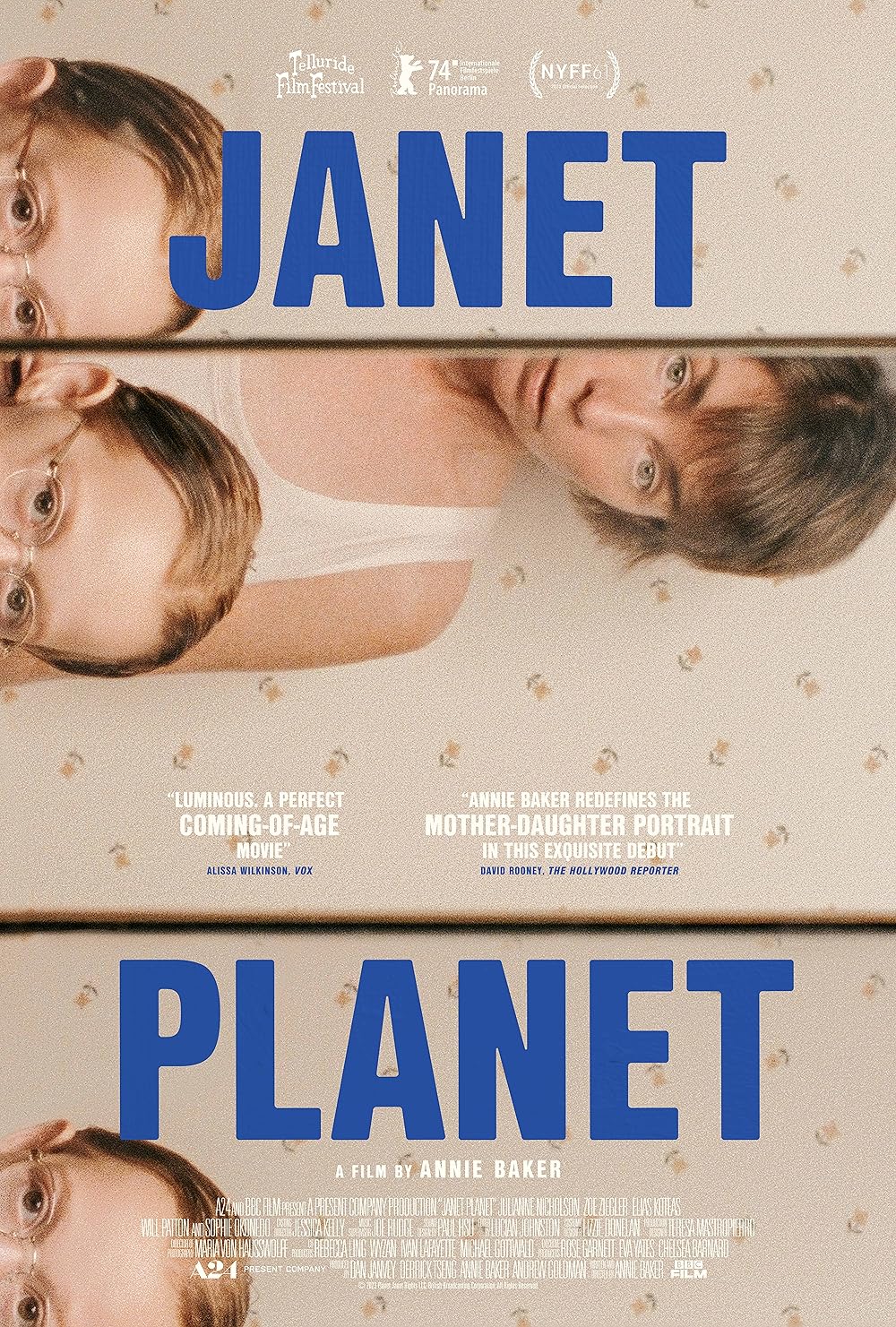
Annie Baker’s Janet Planet opens with 11-year-old Lacy (Zoe Ziegler) calling her mother, the titular Janet (Julianne Nicholson), from summer camp. Over the phone, Lacy threatens Janet by saying, “I’m going to kill myself if you don’t come pick me up.” It is in this darkly humorous moment that the film first intrigues, before it lulls us into its soft grainy texture and keeps us in this subtle and strange filmic space from then on.
Janet Planet follows Lacy and Janet during the summer of 1991 in Western Massachusetts. It is a film enveloped in a summery haze, and separated into three segments which centre around three of Janet’s intense relationships. The first is with her strange boyfriend Wayne (Will Patton), who is followed by long-time friend Regina (Sophie Okonedo), and finally possible cult-leader Avi (Elias Koteas). We witness as Janet navigates caring for a clingy Lacy whilst trying to look for meaning and romance in these people, who unsurprisingly begin to encroach in on the intimate world the duo have constructed for themselves in their rural home.
Close-ups are frequent in the film, often showing Lacy or Janet’s eyes looking at one another, or Lacy’s hand holding her mother’s cheek, or Lacy holding a lock of her mother’s hair. Their relationship is intense, yet loving and soft, both of them unquestioning of each other’s quirks. It is in this softness that the film thrives––allowing these protagonists to live and breathe on-screen as we watch the seemingly mundane summer days unfold before them.
Whilst forging a sense of intimacy, these close-ups also help to facilitate a gaze in the film that places Lacy on the periphery of Janet’s adult world. We witness Lacy as she looks in towards her mother’s messy and fraught relationships, offering the straightforward advice to “Just break up” when Janet asks her about Wayne. Through the act of looking in, there is a loneliness that permeates Lacy’s experience, which is furthered by repetitive shots of the figurines in her dollhouse––perhaps surrogate friends––which she carefully attends to. This loneliness is evident in Janet also as she searches for meaning in the people around her.
Janet Planet is a slow film with little conflict and oftentimes little dialogue, but the tightly constructed visuals reveal a film revelling in the quiet, long summer days stretched out before its protagonists. It’s a beautiful film, one that I was grateful to witness at IMAX for the Melbourne International Film Festival, and one I cannot wait to revisit.
Janet Planet recently screened at the Melbourne International Film Festival aka MIFF, and will be available on digital platforms in Australia beginning November 20th. Interested in writing a review of anything in exchange for a free ticket? Just fill out this form or send us an email at unimelbfilmsoc@gmail.com. For more info on MIFF, including how to become an Under 26 Member for $25 and get access to complimentary year-round preview screenings, head to the MIFF site here.
 MELBOURNE UNIVERSITY FILM INQUIRER