By Chloe Stephenson-Brown
At just 82 minutes, We Were Dangerous is a quick, compelling watch that intricately toes the line between comedy and the gravity of its primary subjects: colonialism, misogyny, and conformity in 1950s New Zealand; highlighting the power of female friendship and found family through exceptional performances and, for the most part, stellar storytelling.
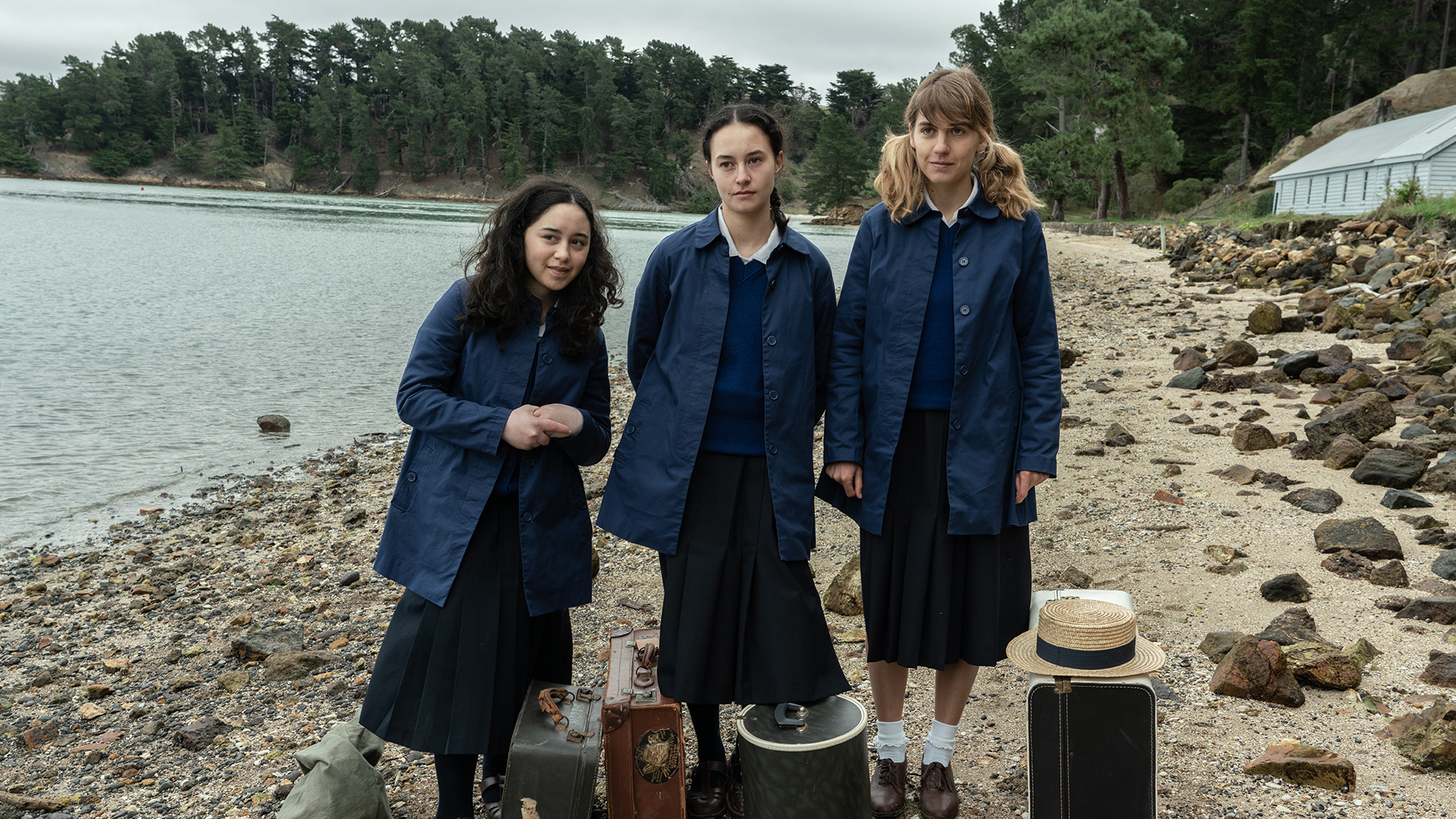
The premise is bleak – teenage girls from a school for “Incorrigibles and Delinquents” are shipped off to a small island in the hopes that isolation will transform them into perfect future wives. Despite the heavy subject matter, which touches on eugenics and forced sterilization as well as power dynamics resulting from class and racial conflict, the film maintains an overall lighthearted, comedic at times, tone. One which ultimately left me wondering if it could have dug a little deeper. I don’t often feel as though films are too short, but this one might have benefited from a longer runtime, as the final act is a trite and abrupt low point. Nonetheless, shot on location in the South Island’s Banks Peninsula and Ōtamahua Island, the setting is beautiful, with striking visuals of the uniformed girls against this barren, remote background, emphasizing the vastness of their surroundings in comparison with the frivolous things they are being taught. This, when coupled with an energetic score shining during a rock and roll dance sequence and equally animated characters, makes for a film full of life.
We focus on three of these girls: two Māori friends, headstrong Nellie (Erana James) and playful Daisy (Manaia Hall, in her debut performance), who try to escape their reform school for girls in the opening scene of the film, and one new arrival, Lou (Nathalie Morris), who is white, upper-class, and queer. The central relationship between these girls is ultimately the heart of the film, and the characters are perfectly fleshed out. Each of the three has a short background exposition given in the form of a single flashback, displaying how they ended up in the school but leaving some aspects to the viewers’ imagination.
There is so much evident care in the portrayal of these girls on screen, and the actors’ chemistry is undeniable, something that actor Erana James spoke about in a Q+A post-film. One of the most touching scenes was shot from above, and features the three on a mattress on the ground, with Daisy (Manaia Hall) draped over the other two. James mentioned that this was a natural resting position in between takes, and she began the scene from one such rest after a directive from director Josephine Stewart-Te Whiu, without Hall expecting the transition. I couldn’t help but smile at tender moments like this and other antics, because it was refreshing to see the girls relax on screen despite their circumstances.

Speaking of Manaia Hall, I couldn’t believe this was her first feature film. She brings a material depth to the innocence of Daisy, making her impossible not to root for, and a crowd favorite at the screening I attended. I was familiar with Erana James’ prior role as a similar character on The Wilds, a young adult TV show that coincidentally also features a group of teenage girls on an island. James grounds We Were Dangerous in her portrayal of Nellie, who is both wise and impulsive with a clear sense of justice. Finally, Nathalie Morris endears as Lou, a privileged but stifled character who has finally found a place of acceptance in Nellie and Daisy, while Rima Te Wiata, as the abusive Matron, manages to almost be sympathetic as a Māori woman who has either completely bought into the system or become a victim of it.
Lou’s whiteness and privilege due to her family’s wealth is mentioned at times, but I do think there was space to delve more into the limitations of her allyship. A scene where Matron tells her that she is lucky because she has the option to hide her sexuality, simply live off her parents’ wealth and marry well is the closest we get to an acknowledgment that Lou is unlikely to face the same consequences as the rest of the island when it comes to misbehaving. Therefore, it was interesting that in the Q+A after the film, Stewart-Te Whiu discussed her desire to make a film in the future that focuses on class conflict because this easily could have had more of that – though I understand the impetus behind keeping it more focused on other aspects.
Although We Were Dangerous might not represent an entirely accurate reality for Māori women in colonial New Zealand, it ultimately doesn’t have to. Director Stewart-Te Whiu spoke about this post-film, namely noting that not all period pieces have to be steeped in tragedy, and, as a Māori woman, she does not want to be confined to stories about pain. As a debut film, I think it is an incredible achievement, and will be seated for whatever comes next from her.
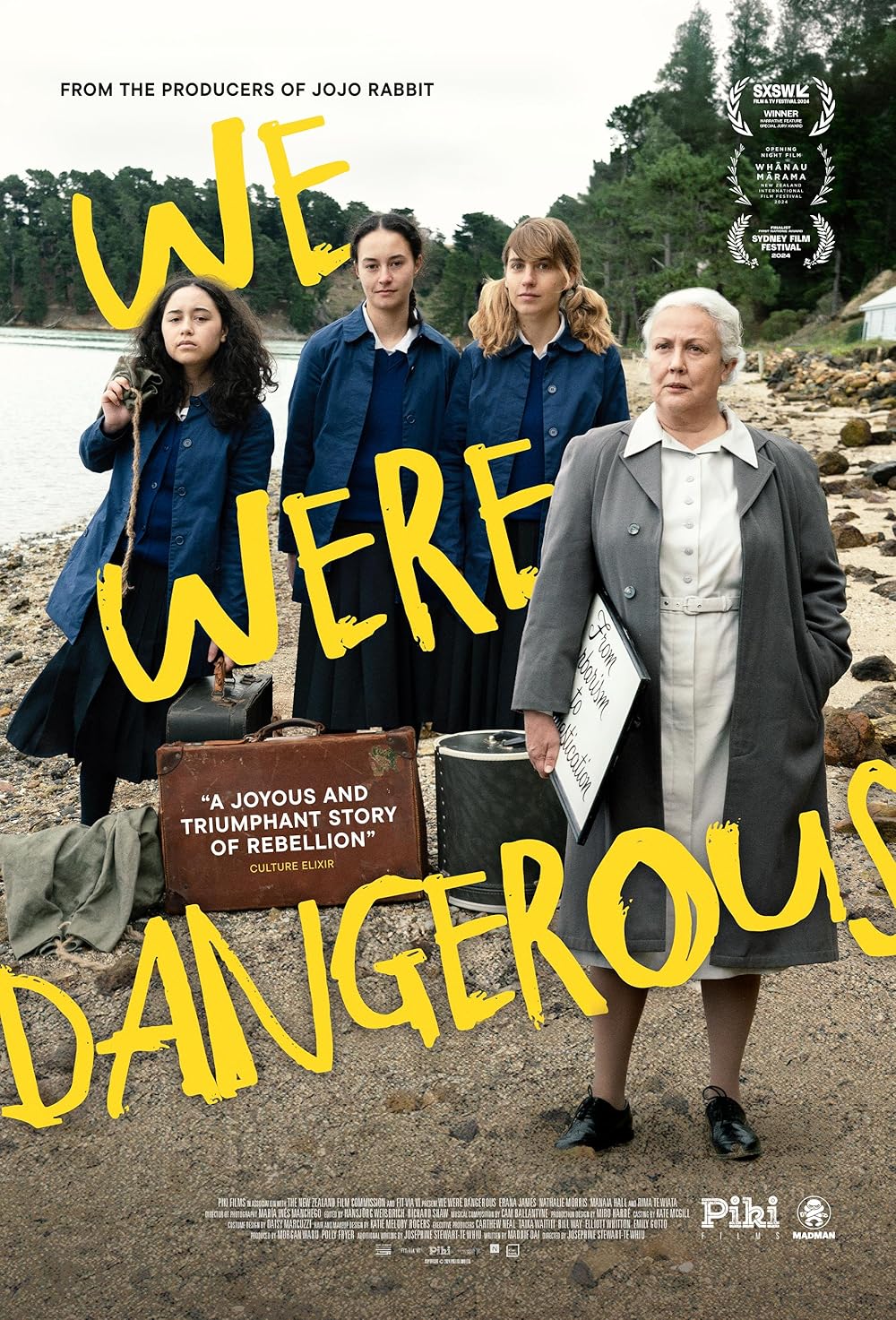
We Were Dangerous won the Special Jury Prize at SXSW (the South by Southwest film festival) and was the selected opening film for the New Zealand International Film Festival in all regions except Christchurch this year. All of its original CBD screenings at MIFF (the Melbourne International Film Festival) went to standby, as did an extra screening added. A wide release date in Australia is still to be announced.
Interested in writing a review of anything in exchange for a free ticket? Just fill out this form or send us an email at unimelbfilmsoc@gmail.com. For more info on MIFF, including how to become an Under 26 Member for $25 and get access to complimentary year-round preview screenings, head to the MIFF site here.
 MELBOURNE UNIVERSITY FILM INQUIRER