By Lachie Carroll
The Victorian premiere of La Cocina, a stylish new feature from Mexican director Alonso Ruizpalacios, was a night defined by a refreshingly honest pursuit of artistic ingenuity. For many attendees, La Cocina would have been their first taste of this year’s MIFF program, and if the film is any indication, 2024’s festival will be one to remember.
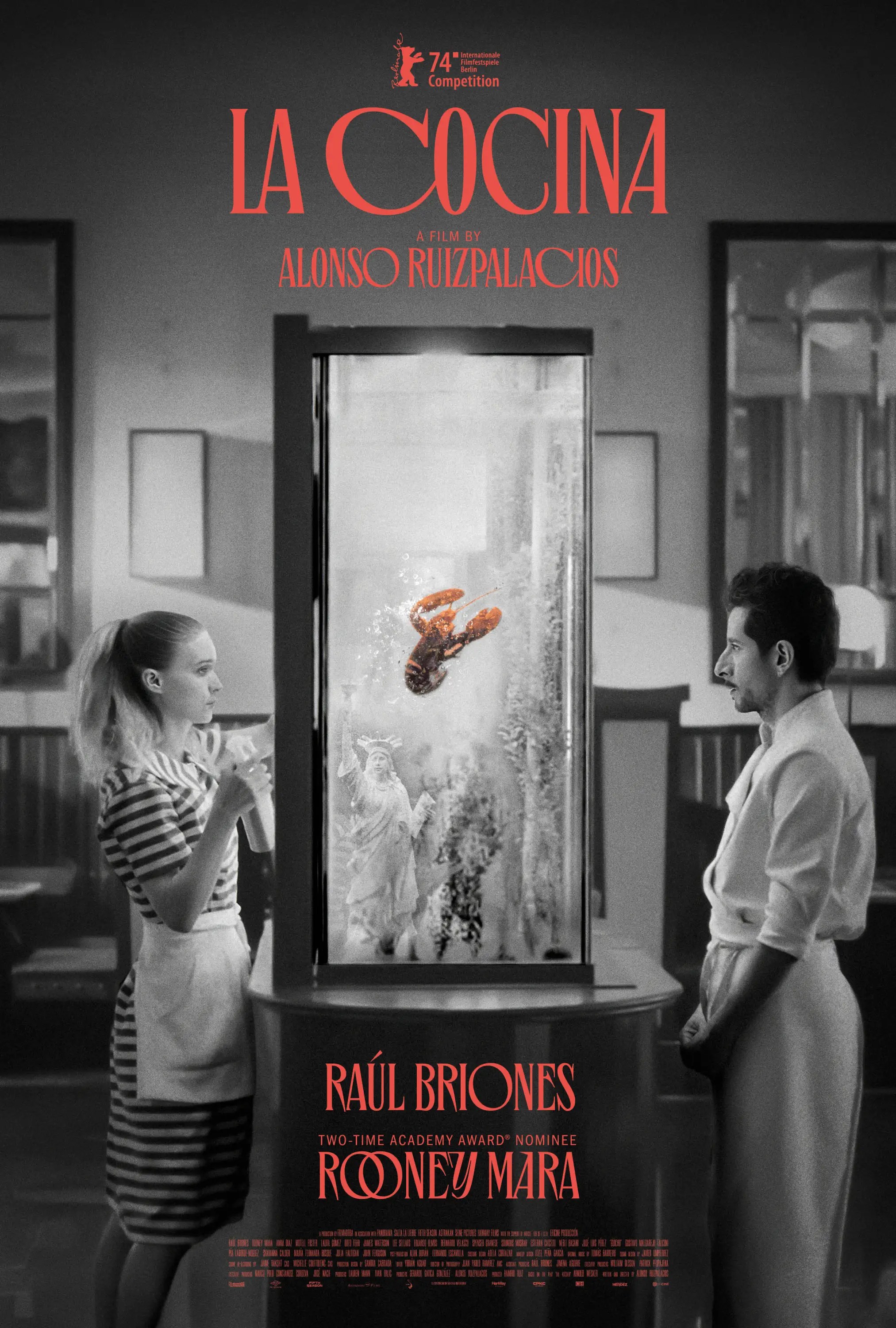
La Cocina follows the eclectic staff members of The Grill, a tourist trap restaurant in the middle of Times Square, as they grapple with accidental pregnancies, $850 worth of stolen money and the ever-changing tides of a career in hospitality. We focus on line cook Pedro (Raúl Briones) and waitress Julia (Rooney Mara), two incredibly compelling leads whose relationship defines the emotional core of the film. Rounding out the lead cast is Estela (Anna Diaz), a recent immigrant to New York seeking employment at The Grill. Diaz’s character acts as the film’s vessel for audience immersion, as we accompany her on the Herculean trial that is a weekend lunch service, the film’s action taking place across a single day, when tensions rise among chefs and the restaurant’s managers close in on their thieving employee. This film is ultimately an examination of what it means to live in modern America, and it holds no punches delivering its ultimate thematic resolution.
The American Dream is a topic that has been endlessly tackled by authors, filmmakers and artists, most dissenters reaching the conclusion that the United States is more interested in retaining its hegemonic position on the world stage rather than tackling its internal failures. La Cocina takes this idea and bathes it in vitriol, the film an incredibly strong indictment of the state of America and the conditions in which its people are forced to live and work. Its ensemble is mostly comprised of Hispanic chefs and wait staff, its reverent depiction of the Spanish-speaking reality of New York kitchens refreshing and important. La Cocina doesn’t praise the conditions of the kitchen itself, but celebrates the community and strength exhibited by its inhabitants, working as a testament to hardworking individuals in the face of a country that has abandoned them. This indictment of the American dream is unlike perhaps anything that exists in mainstream cinema, the film proving itself as thoroughly modern and culturally significant through it.
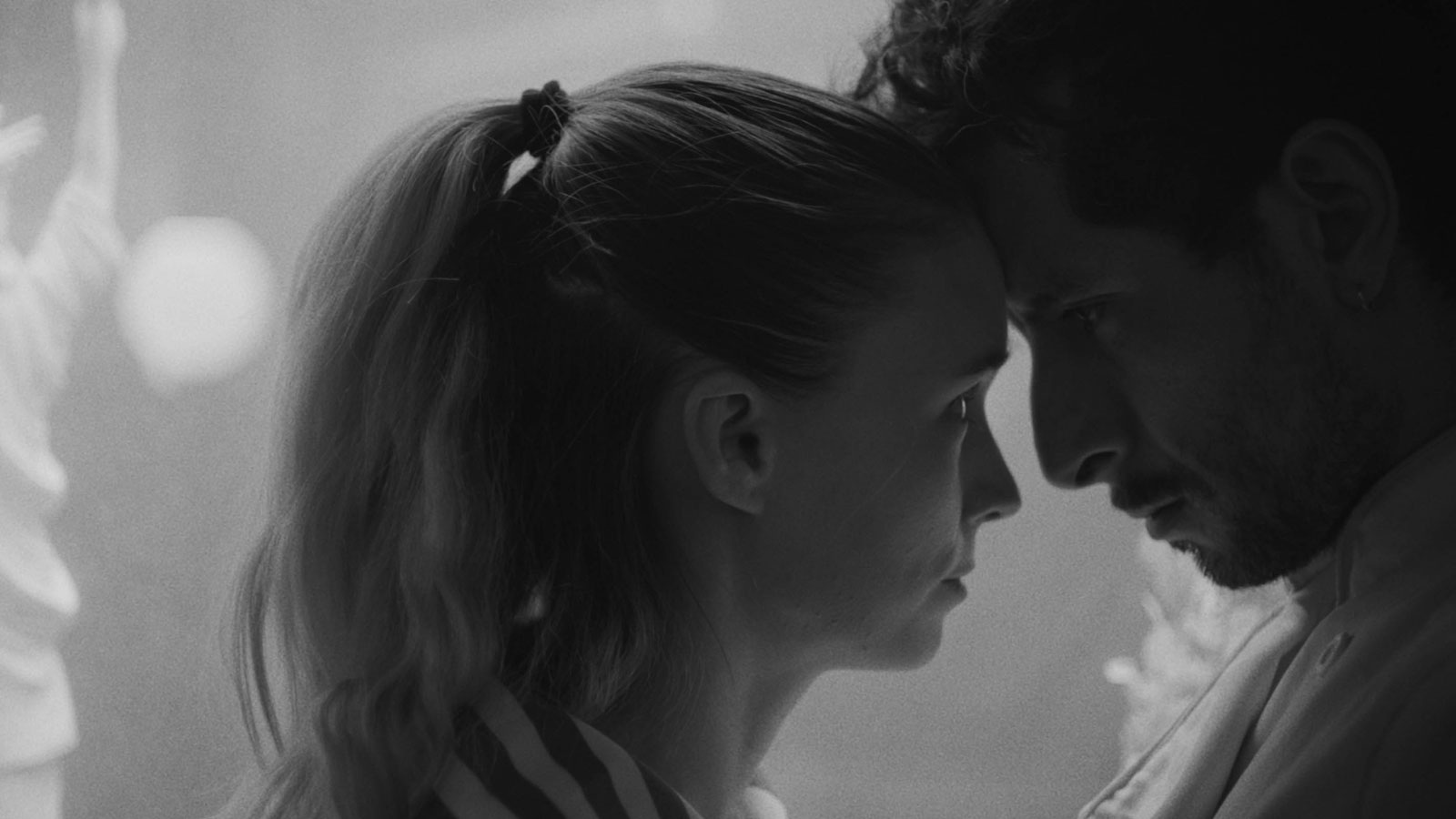
The central relationship between Pedro and Julia is an absorbingly compelling tragic romance, the characters bound to one another in an unapologetically dramatic fashion. The camera treats the pair with detailed attention, the strong, rigid manner in which their interactions are framed reflecting the sheer severity of their dynamic. Julia’s pregnancy is the largest complicating matter in the pair’s relationship, and through this concern La Cocina tackles another delicate social issue with gentle realism and frank honesty. It’s obvious from the get-go that Pedro and Julia will never truly get to be happy together, something which threads their storyline with reliable, old-fashioned melodrama. Much of the success here can be attributed to the skill of their performers, Briones and Mara both delivering sound interpretations of characters that are laced with a minutiae of nuance. Mara especially continues to assert herself as a generational talent. Here she commands the screen in a different way than her recent turns in Sarah Polley’s Women Talking (2022) and Guillermo del Toro’s Nightmare Alley (2021). She instead showcases a dormant intensity, a matured, non-goth version of her appearance as Lisbeth Salander in David Fincher’s The Girl with the Dragon Tattoo (2011).
If nothing else, La Cocina won’t be like anything else you see this year. This decade, even. It combines the intensity of The Bear with a vital and all too often unheard thematic concern, which results in a film that is sure to compel everyone from professional chefs to those of us who have never stepped foot in a back of house. This punching condemnation of modern America’s treatment of workers, combined with a deliciously chaotic narrative delivered by some of the most capable performers in the industry asserts La Cocina as not only a standout in MIFF’s encyclopaedic program, but also this year’s cinematic releases at large. To see La Cocina is not to observe from afar, but to throw yourself into a one-of-a-kind, immersive cinematic experience you will not soon forget.
La Cocina can currently be seen at the Melbourne International Film Festival aka MIFF, running from August 8th until the 25th in cinemas and from the 9th until the 25th online. Interested in writing a review of anything in exchange for a free ticket? Just fill out this form or send us an email at unimelbfilmsoc@gmail.com. For more info on MIFF, including how to get into sessions on standby, check out this article.

 MELBOURNE UNIVERSITY FILM INQUIRER