By Madeleine McDonald
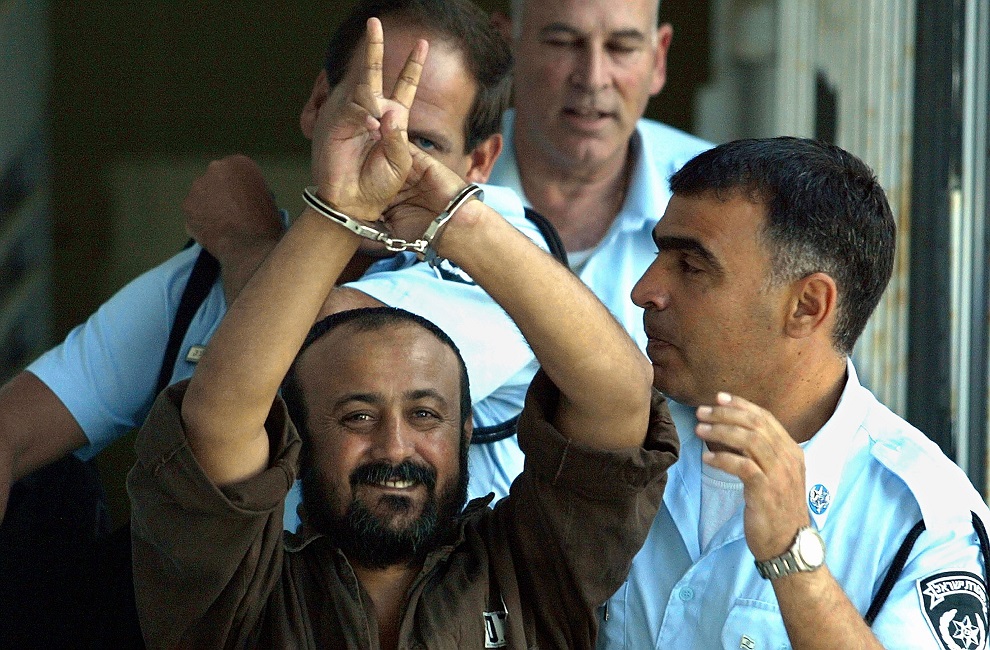
With the horrors going on in Gaza, it’s easy to see the Israel-Palestine conflict all boiling down to Israel vs Hamas. But Hamas is only a fraction of all Palestinians. And Palestinians encompass not just people from Gaza but also the West Bank and Israel (being some 77% and 21% of their populations respectively). Many of whom are imprisoned indefinitely. Georgia and Sophia Scott bring to screen an intimate portrait of West Bank Palestinian political leader Marwan Barghouti in Tomorrow’s Freedom. Depicting one man’s decades-long pursuit for Palestine’s freedom, as well as his own, and how this man’s passion and dedication has inspired not only the Palestinian people but also his own family.
Barghouti has been imprisoned since his 2002 arrest amidst the Second Intifada, and his subsequent conviction by an Israeli court for several life sentences has meant that his story has been told largely by second hand accounts from family, supporters and critics that have orbited his sphere. This film is one such account. Alongside archival video footage of the man himself, interviews about and photos shown of Marwan give the documentary an odd sense of an almost post-mortem account of a man that is still living yet not present in the public.
So separated from the outside is this leader that the documentary features several scenes where his wife, Fadwa, and sons, Aarab and Sharaf, must make a 12 hour plus journey to the prison where Marwan is held, only to have just 45 minutes with him – once a month if at all. These scenes are particularly heartbreaking and highlight the pain and longing the journey to prison has on the buses full of visitors.
Another detail that the documentary makes frequent reference to is the link between Nelson Mandela and Marwan Barghouti. The parallels between these two political figures are hard to miss, with both being jailed for not only their political activism but also their popularity as leaders of their people. Mandela was imprisoned for nearly three decades, and four years after he was released became president of South Africa. The documentary deliberately builds on this Mandela-Marwan parallel with interviews with former ministers of Israel and the Palestinian National Authority, diplomats, and journalists all speaking on how Marwan is the type of political figure that would be an ideal Palestinian president. The kind that could unify the Palestinian people and Israel towards peace. It is this point that the documentary indicates is why he is seen as such a threat to Israel’s current political establishment.
Whilst the film does well to build a portrait of Marwan, his importance and his plight, the real heart to Tomorrow’s Freedom is Marwan’s wife Fadwa. The film talks to and follows various Barghouti family members, but it is Fadwa in particular that is rightly featured the most. With the film following her as she leads the movement for her husband’s release. Fadwa, a lawyer herself, travels around the world, meeting and speaking to various officials, never stopping. She is the quiet strength of the film, an ironclad will as strong as her husband.
Overall, Tomorrow’s Freedom is an intriguing profile on a political figure that balances both close inner circle accounts with broader international political conversations. One story in the centre of a country’s never ending battle for tomorrow’s freedom.
Tomorrow’s Freedom recently screened at the Palestinian Film Festival Australia and can be watched at home through a variety of video on demand services. For a list of theatrical screenings of the film occurring internationally, head here.
 MELBOURNE UNIVERSITY FILM INQUIRER