By Jordan Low
One bored afternoon as a teenager, I picked up a random DVD we had lying around. The back cover synopsis suggested something different to my usual fare, but nothing could prepare me for the masterpiece that unfolded on screen. That was Todd Field’s 2006 movie Little Children, and, to my disappointment, a quick Google search showed that it was his final film to date.
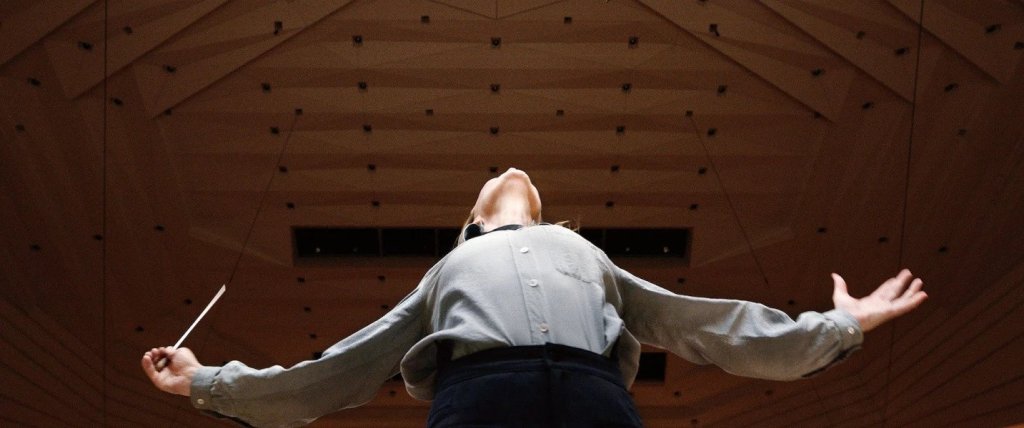
This year, the world of cinema has been blessed with Field’s long-awaited return, Tár. Briefy, the film charts the life of accomplished (and fictional) conductor Lydia Tár (Cate Blanchett), as she deals with the pressures of her work and private life. While accurate, this summary still does the film a disservice, as Field has imbued it with so much more.
For a reviewer who has seen their fair share of wild films, Tár somehow manages to provide a fresh cinematic experience that I can hardly put into words. The overall plot is simple, yet interspersed with many complex scenes and themes that give the events a strange, often dreamlike quality.
Spoilers: some plot details ahead
Tár opens with a phone screen showing an unseen character texting, perhaps foreshadowing the part technology and communication will play in Lydia’s downfall later on. Throughout the film, Field seems to try to make us uncomfortable by employing fast cuts to scenes that may last seconds at once, while also using long, unbroken takes for others. Adding to the weirdness is a subplot of Lydia being haunted (sometimes literally) by figures from her past, which makes little sense early on but better fits the film as it approaches its climax. A scene where Lydia’s daughter insists Lydia holds her foot to sleep feels typically Lynchian, and so is a disturbing neighbour and her wheelchair-bound mother in a doll-filled home.
The camerawork and direction are as strong as Field’s two previous efforts; every scene is captured, lit, and played out with conviction. While some of the jargon in the beginning creates an inaccessibility to these extremely wealthy characters, all scenes involving the orchestra are satisfyingly powerful and give weight to the often implied importance of Lydia’s job. The score by Hildur Guðnadóttir is elsewhere moody and eerie without being distracting. Bringing all the varied elements together is, of course, the central performance by Blanchett, who manages to infuse this tyrannical yet brilliant character with just enough warmth and intelligence to keep us invested in her story. Had Lydia been played by a less nuanced actor, the character could have very easily been irredeemably cold and unrelatable. The supporting cast does great, but still fittingly feel like props when paired with Blanchett’s hypnotic performance.
Unsurprisingly for a film about a successful woman in a traditionally male-dominated field, one of the main themes of the film is gender. An early montage has Lydia picking an album cover of her hero Mahler and going to get a suit tailored to be almost identical to the one he is wearing. While the surface meaning of the scene is obvious, it also efficiently summarises Lydia as a person; her need to copy an existing male industry leader makes it seem as though her accomplishments were made possible through, not in spite of, her defiance of traditional gender norms and imitation of the normalised masculine conductor.
What is a surprise is the commentary on cancel culture, coming mostly in the form of an engrossing scene where Lydia teaches a class with a student who refuses to celebrate the ‘cancelled’ Bach. I cannot say I agree with having a both-sides approach to such an important topic as the #metoo movement, and a few lines of dialogue almost feel ripped from your average conservative YouTuber. Furthermore, having the student be black, seemingly insecure, and wearing black nail polish draws a fine line between depicting realism and Field playing into stereotypes of the common liberal, woke university student.
Those are not the only elements of the film that proved difficult to swallow. Although I understand Field’s intent was to show that unchecked power can consume people of any gender, the decision to make Lydia such a clear-cut abuser is disheartening given the rare opportunity to depict a positive yet powerful and successful woman in an elite field such as conducting. Additionally, when the film transitions to the Philippines, as the single Asian in a hall full of white viewers, I couldn’t help but feel embarrassed with some common stereotypes being played for their comic factor, regardless of their potentially ironic intention: the female masseurs being submissive, branded with numbers, and lined up like sexual slaves, and the finale playing into the trope of Asian countries being filled with geeks of poor cultural taste, especially when played as an intentional contrast to the high art of classical orchestra in the West.
Disregarding that detour, Lydia’s shocking confrontation with her fellowship manager, budding composer Kaplan (Mark Strong), felt like the perfect way to end the film, with its staging being a nice bookend to the first orchestral scene in the movie. The tension and momentum that Field builds up to that point dissolves away as it moves on to the final act.
For all its flaws, Tár is one of the boldest films I’ve had the pleasure of seeing on the big screen, and Field’s return to directing is decidedly worth the wait.
Rating: 8.5/10
Tár can be seen in cinemas now.
 MELBOURNE UNIVERSITY FILM INQUIRER