By Shaunak Wanikar
Spoilers: highlight black bars to reveal
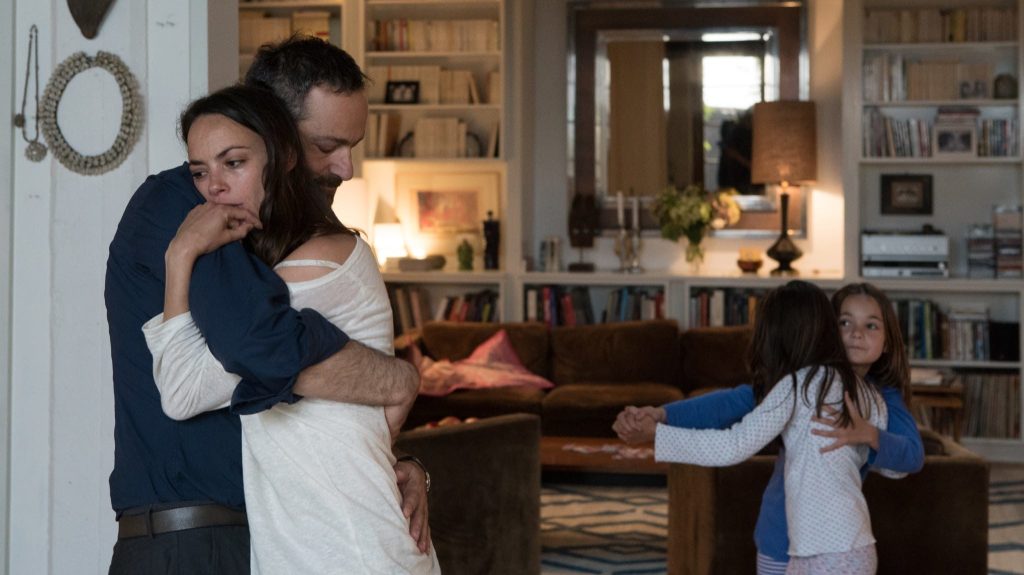
L’Économie du couple, or After Love, is an absorbing drama about how love gone sour bitterly affects the life of an estranged couple as well as their children. Although the movie for the most part has one setting, the couple’s house, it is riveting to witness and at times so sad and heart-wrenching. Joachim Lafosse, the director and co-writer, does not hold back when it comes to dissecting their relationship to its very core, with the strain that they are under being vividly portrayed.
What I absolutely loved about this movie is its realism; no unnecessary music, effects, or airbrushed people. Just everyday people having truthful arguments and undergoing a difficult period in their lives while trying (unfailingly) to shield their children from the ugliness of their squabbles. In contrast to contemporary movies which eschew realism and practicality in favour of formulaic entertainment, After Love refreshingly shows us how we actually live and function and love and break away from each other. It almost feels as though a hidden camera is recording the day-to-day life of a family struggling albeit, almost paradoxically, in a completely non-voyeuristic manner.
Marie (Bérénice Bejo) and Boris (Cédric Kahn) are the alienated couple in question who, due to financial constraints, are forced to dwell under the same roof. They have twin daughters, Margaux and Jade (Margaux and Jade Marker), who they desperately adore and are their only outlets for the love that they had erstwhile reserved for each other. The issue at hand seems simple: Boris wants the share he thinks is due to him – half of their house that he helped renovate, although Marie paid for almost all of it – while Marie thinks he deserves no more than a third of the portions. Keeping this impasse in mind, they play mind games with each other, until the tension becomes too cloying and toxic for all (including us, the viewers) to bear. Although our sympathies may lie with Marie due to the fact that it is her money and job that has always brought home the bacon, the vassal treatment which is handed out to Boris, her partner of fifteen years, does seem draconian and slightly unfair, even if it can be argued that Boris, by being constantly unemployed, doesn’t help his cause one bit.
In one memorable scene, he returns home to find Marie playing host to their friends at dinner, who all have ostensibly sided with her. Boris, understandably, finding his masculine pride wounded, invites himself to the table even though it is clear he is not wanted, and engages in some bitter and cringe-worthy conversation.
Bejo is exceptional in playing the semi-restrained and angry mother who tries desperately to find peace and break the shackles pinning her to her past lover. Her facial expressions are perfectly effective in revealing the angst and pain inside. Kahn meanwhile holds his own as the unrepentant father who desperately tries to impose himself on a household which has lost his backing. He does well at hiding Boris’ hurt pride under some unbecoming humour. Jade and Margaux shine as well as the two daughters who are caught in a whirlwind of toxicity.
Another noteworthy scene is when the twins play music and start dancing, inviting their parents to join them on the “floor”. Marie is clearly emotional from this family moment and when she dances with Boris we can see vestiges of the past love that bound them together. But alas, it is too little too late. This tenuous peace is once again shattered by their all too familiar arguments before, finally, the pair are able to truly see the devastating effects that their fighting is having. The following penultimate scene is beautiful, and the ending is equally indelible.
Another scene which is noteworthy is when the twins play music and start dancing, inviting their parents to join them on the “floor”. Marie is emotional from this family moment and, when she dances with Boris, we can see vestiges of the past love that bound them together. But alas, it is too little too late. This tenuous peace is once again shattered by their all too familiar arguments before finally, when one of the twins is taken to the hospital, the pair are able to truly see the devastating effects that their fighting is having. The white flag is raised and an agreement is reached.
The following penultimate scene is beautiful; the two sit at a coffee shop having finally found closure and are able to talk like old friends, with the terms of their agreement being read out in the background. The ending is equally indelible; the two sitting in front of the judge while staying silent and finally letting go of the past.
L’Économie du couple isn’t a particularly easy movie to watch because it reminds us of how love in reality has a very mortal aspect to it and how seemingly petty squabbles over money and other issues actually have the potency to destroy past affections. But it is honest and sincere and absolutely deserving of a watch.
L’Économie du couple can currently be watched in Australia using ‘alternative distribution methods’.
 MELBOURNE UNIVERSITY FILM INQUIRER