
By Alessandra Akerley and Lachlan Gallagher
Scroll down for interview
Cinema Nova: ‘the art of motion pictures’ or ‘a movie theatre’ + ‘new’ or ‘a star that dramatically increases in brightness and then fades away to its former obscurity in a few months or years’. It’s a name with multiple possible meanings, but that perhaps in part roughly derives from that classic term of ‘movie star’, denoting a figure renowned for playing a starring and successful role in films. And as far as they go, it’s one that the movie multiplex located in Lygon Court of Carlton, just a couple of blocks from our own Parkville campus, has lived up to in that regard, and which is still shining bright.
Two theatres is what co-founders Natalie Miller and Barry Peak had to work with upon Nova’s opening in August of 1992. Concerned that they wouldn’t be able to source enough arthouse films for the new cinema, they needn’t have worried. As it celebrates its 30th anniversary this year, Nova now stands as the largest independent arthouse cinema in both Australia and the Southern Hemisphere, having grown to sixteen screens running in a sprawling, labyrinthian setup that attracts a wide variety of filmgoers, from tired students, to families with children, to retirees. This year marks not just the pearl anniversary of the gold and purple cinema though, but also, of course, the varied anniversaries of those who work there. Amongst them: Kristian Connelly and Lucy Fenwick Elliott.
A Swinburne University of Technology Film, Cinema and Video Studies graduate, Kristian Connelly previously worked as a Location Manager and Film Programmer for Village Cinemas, before serving as General Manager of Cinema Nova from March 2008 until January 2020, and now as CEO. Occasionally, he guest lectures at the University of Melbourne. The first film he watched at Nova was Lars von Trier’s Breaking the Waves in 1997.
A University of Melbourne Screen and Cultural Studies with Honours graduate, Lucy Fenwick Elliott served as Junior Content Creator for Cinema Nova from January 2020 until March 2021, and now acts as Social Media & Content Coordinator. She recently completed her thesis on feminism, postmodernism, and the referential-reinvention of older cultural film texts for teenage girls. The first film she saw at Nova was Taika Waititi’s Hunt for the Wilderpeople in 2016.
In light of Nova’s Birthday, we were able to interview Kristian and Lucy about their work and experiences with the cinema. Below are our questions and their answers.
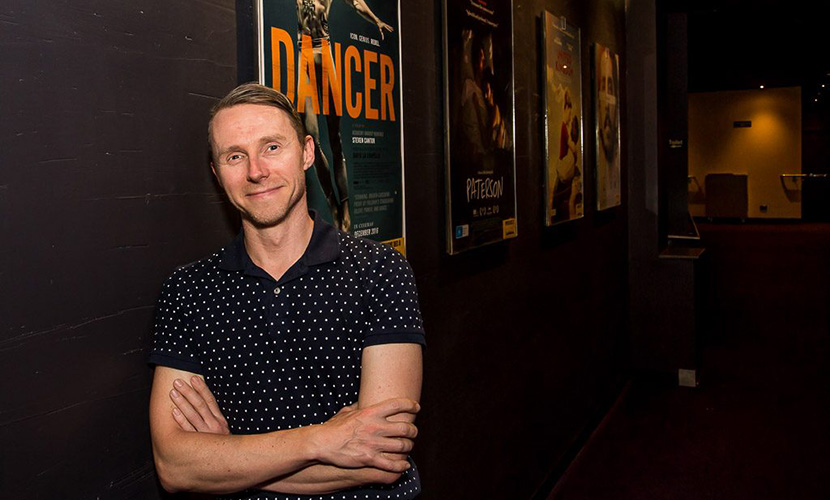
Question: Hey Kristian and Lucy. To start with maybe the most exciting question, what does your typical day working for Cinema Nova involve? For you Lucy, when it comes to content creation and curation, and for you Kristian, when it comes to overseeing and implementing the cinema’s vision, film exhibition and, the oft thought enemy of art, finances. From the highlights, to more challenging aspects, to something that might surprise people.
Kristian: Every day is different due to the deadline-driven nature of each day of the week, but a normal week might include a number of early-morning sessions of films under consideration for the theatre, discussions and meetings with our film distribution partners to work out optimal opening dates for their films, brainstorming new events to run across each week, scheduling new sessions for pre-existing events such as Double-Features or Anniversary Party screenings, finessing our candy bar sales approaches with members of the Front Of House team, keeping across breaking news and reviews that might impact the days, weeks or months ahead, and updating documentation to review how we are performing against previous years as well as other cinemas in our market. While I tend to prioritize the more creative aspects of my role, I don’t dislike reviewing the data, as figures can keep you grounded in terms of what is working and what is not – otherwise it’s too easy to get lost in your own internal narrative.
Lucy: There really is no typical day! I write copy and design graphics across all our social media, our weekly eNews, our website and more, so I am terminally online, spend a lot of time in front of the screen and always know the niche Film Twitter trends and drama. It’s important to me that our communications feel authentic and personal, so I try to check in with our staff and audience as much as possible. My job requires a lot of multitasking – as we’re often juggling 50+ films and events in one week, I need to stay on top of everything and make sure every single film gets a moment to shine, particularly those from smaller, local filmmakers without as much publicity at their disposal. My favourite thing to do is work on custom Nova events and mini-festivals – pitching, planning, thinking up the best publicity angles, designing assets/cocktails/collectible badges… I love a project. We also do sometimes get to watch movies on the clock!
Question: What are your proudest achievements at Nova so far, and your favourite memories associated with the cinema?
Kristian: After being a part of Cinema Nova for as long as I have, it’s easy to forget past successes (and failures). When reviewing various scrapbooks for our recent thirtieth anniversary, the wave of nostalgia was considerable as it brought back many memories that had long been forgotten. Proudest achievements probably include turning so many smaller films – or films not originally scheduled for theatrical release – into major box office hits, initiating our ‘Bar Takeovers’ for films such as The French Dispatch, Once Upon A Time In Hollywood and Blade Runner 2049, starting our quarterly in-house magazine NovaDose (now up to issue 26), and finding a way to differentiate our retrospective screenings of classic films.
Lucy: I’ve been so proud of my dip into the world of programming and event planning – as a kid I wanted to be a party planner, and I’m living that dream in the best way possible. I think the events, retrospectives and Q&As we run here are really special, and they can’t be replicated because they’re driven by the genuine passion and interest of our staff and patrons. I love getting to introduce people to films like The Love Witch or The Last Unicorn, and celebrate modern classics like Gone Girl. Favourite memories are probably photographing Emma Thompson – who called me a Dickensian orphan – and having Instagram posts reposted by Edgar Wright and the one and only Tommy Wiseau.
Question: A lot of women who work in and love film often feel like they don’t have spaces to voice their opinions on movies, and that it can be hard to have their work and interests taken seriously in what can be such a male-dominated space. Are there ways that you try and have tried to champion female and diverse voices, from both filmmakers and audiences, in your work with Nova?
Kristian: Will leave this to Lucy to reply.
Lucy: Women’s participation in the film industry – in front of the camera, behind the scenes and as audience members – has been a passion of mine for a long time, and was my major area of study at UniMelb. Nova has a long history of championing female filmmaking talent. Recently, we ran a limited season of feminist cult classic The Love Witch that featured an interview between me and director Anna Biller, which drew lots of interest from our regular audience but also branched out into witchy communities, fashion enthusiasts, and a huge age range of women from across Melbourne. In terms of audiences, I’m very interested in unabashed fun and pleasure for a female viewer. I’ve been very proud of our Twilight marathons – they draw a crowd that is 90% female, skews young, and is absolutely feral in the best way. Having grown up in a culture that relentlessly bashed anything to do with teenage girls, it gives me the deepest satisfaction to see women coming together enjoying something without any shame or fear of ridicule.

Question: In the era of blockbusters, streaming and online piracy, what is it about independent cinemas that remains integral to the movie watching experience?
Kristian: To offer something that is not a blockbuster and to allow smaller films to be found by their audience. Cinema Nova’s curatorial approach eschews bigger films (unless they’re really remarkable and deserve space amid the rest of films we program) in favour of quality and arthouse releases, as getting those two sides of the offering to coexist is very difficult. In the multiplex, where sequels and franchises battle it out for screen-space, movies live or die by their box office ranking. When those films aren’t in regular competition with more niche product, people have time to discover them. So, for instance, a film like the exceptional Everything Everywhere All At Once can play 22 weeks (at the time of writing) without interruption and go on to become one of our biggest films of all time – a historical ranking that such an inventive film deserves. At other venues that film was taken off far too soon to accommodate the likes of Marvel, Jurassic Park and other blockbusters.
Lucy: I think the community is what sets cinemas like Nova apart in the age of streaming. There’s a powerful energy to experiencing art together that I think people really value, especially after the last few years. We’ve built up a real sense of trust and collaboration with our audience – we keep films playing for as long as our patrons want to see them, and they trust us enough to know that we’re playing and promoting cinema they’ll really enjoy. Something like The Room could never exist at a huge multiplex!
Question: Do you have any favourite releases this year so far, or/and what’s one of your most anticipated upcoming releases?
Kristian: To-date, Everything Everywhere stands tall as the film of the year. I also admired Japanese drama Drive My Car, Baz Luhrmann’s audacious Elvis biopic, nature documentary The Velvet Queen, mood-piece Memoria, volcanologist documentary Fire Of Love, David Bowie event Moonage Daydream and Palme d’Or winner Triangle Of Sadness.
Lucy: I have to agree that Everything Everywhere was something special – I doubt anything will top that before the end of the year. Jodie Comer is absolutely unmissable in National Theatre Live production Prima Facie, a play that I truly think every person should see. In upcoming films, I really enjoyed Australian slasher-comedy Sissy, and I can’t wait for our audience to see Triangle of Sadness…
Question: Birthdays are a time to reflect on the past, but also what the future could hold. Given how much Nova’s grown over the last 30 years, while still seeming to retain its original ethos, how do you think, or hope, the cinema will look in another 30?
Kristian: In my two decades in the industry I think I’ve seen members of the media declare cinema as ‘over’ at least three or more times (DVD, Streaming, COVID) yet it continues to attract audiences. Acknowledging that the medium is now over 120 years old, it’s difficult to imagine that in thirty years people won’t still be enjoying feats of the imagination in a shared environment. Sure, new technology in recent years has undoubtedly drawn attention away from ‘the movies’ but cinema is a part of our cultural fabric, in the same way that Melbourne over-indexes as a population who likes to go to the gallery, the theatre and to myriad arts events. If I think about the movies I was watching thirty years ago, they’re very similar to what we can see at the movies today: fantasies, human dramas, windows into worlds we may never visit or experience, thrilling mysteries… We will have improved technologies or new stars to watch, but the story is what gets us back every time, so as long as filmmakers keep telling new tales, or retelling the tropes of the last few thousand years in interesting new ways, I believe the attraction of leaving reality behind and getting transported to somewhere different will keep movies relevant and one of our favourite pastimes.
For information on everything showing at Cinema Nova currently and in the near future, head to their website here. In addition to discount prices on Mondays – $7 before 4 pm and $10 afterwards – University of Melbourne students can also access the same prices every Wednesday with a valid student ID.
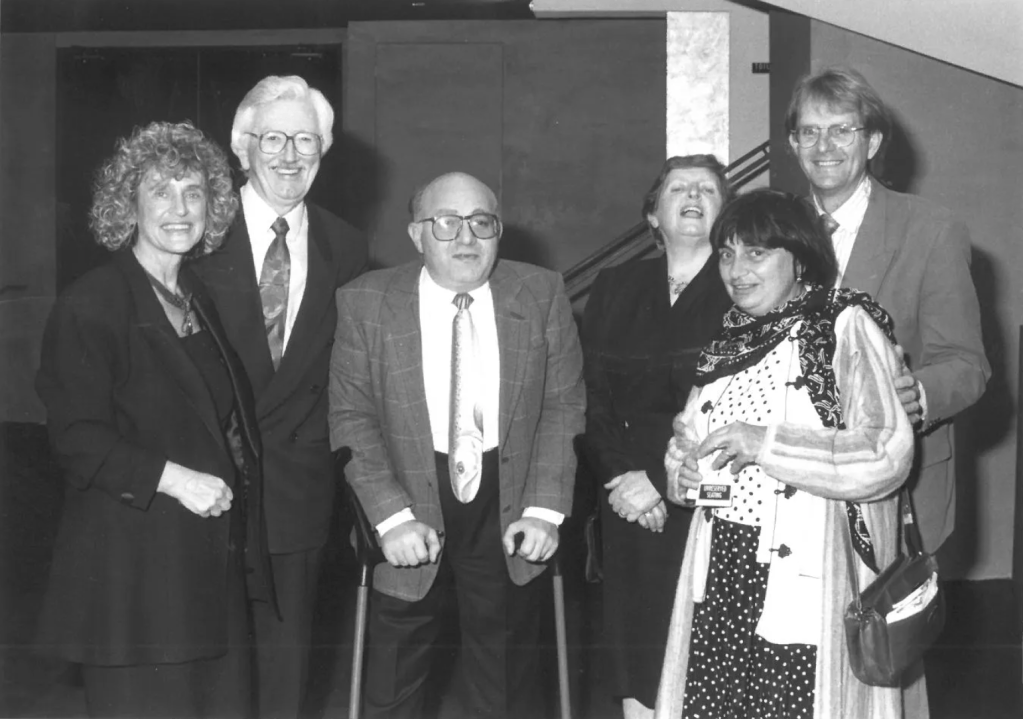
Opening in 1992 on the 27th of August, an intermittently rainy Thursday, Cinema Nova was born with twin screens. Indicative of the diverse range of arthouse, retrospective and in intention interesting films and events that it would present, on that first day one theatre showed The Favour, the Watch and the Very Big Fish (1992), a British-French comedy by Australian writer and director Ben Lewin, and one showed Mediterraneo (1991), an Italian war dramedy that had won the Academy Award for Best Foreign Language Film earlier that year. Amongst the filmgoers in attendance were Lewin himself, famed French New Wave filmmaker Agnès Varda, critics Ivan Hutchinson and Peter Thompson, and co-founders Natalie Miller (then head of The Longford Cinema – a supporter of Australian and international films not just from Hollywood – in South Yarra; as well as founder of distributor Sharmill Films; and University of Melbourne Bachelor of Arts graduate) and Barry Peak (then operator of The Valhalla Cinema – a screener of cult movies and marathons – in Richmond and later in Westgarth; and occasional 80s filmmaker). Having initially designed the cinema alongside young architects Leonard Hamersfeld, Andrew Straube and Peter Harper, and graphic designer Brian Sadgrove, who shared in the belief that ‘the experience of going to the cinema should be as exhilarating as the movie itself’, Miller and Peak remain involved as co-directors to this day.

 MELBOURNE UNIVERSITY FILM INQUIRER