By Jordan Low
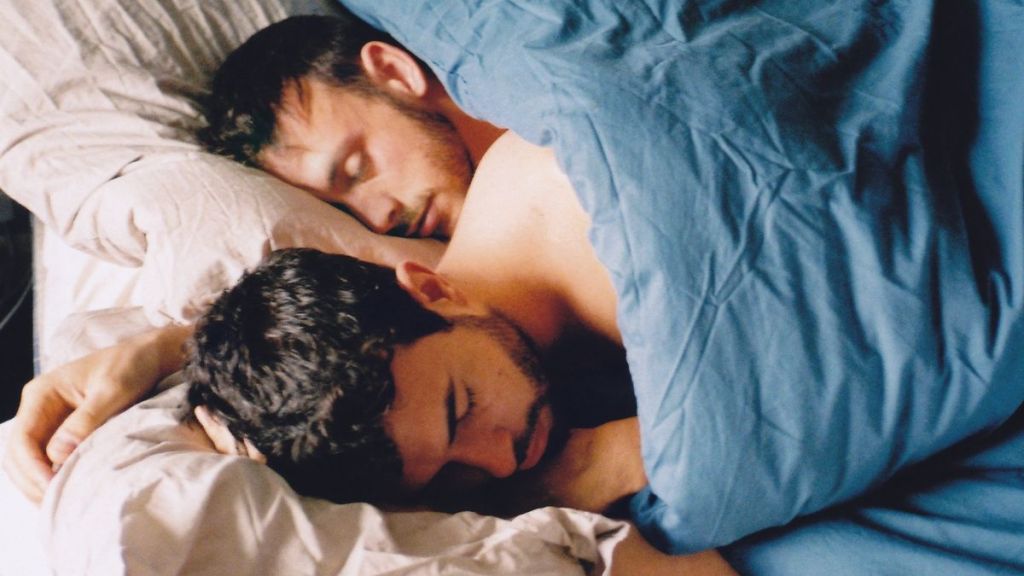
Weekend charts a one-night stand between two men that begins like any other but ends up affecting both parties in more ways than they expected. Russell (Tom Cullen) is an introverted lifeguard who heads to a club alone after a drunken night out with friends. There, he meets Glen (Chris New), an aspiring student who has dreams of making it big in the art scene. Glen spends the night at Russell’s, and intrigues Russell enough that he contacts Glen again the next afternoon to continue what he believes to be a rare connection. Everything goes well until the kicker comes: Glen is leaving the country the next day to attend a two-year art course. The rest of the film deals with this revelation and how it affects their very new relationship that is suddenly facing a premature end.
Haigh explores themes of loneliness, regret, and opportunity with subtlety and restraint. We relate to Russell and Glen not from what they say but how they react to what each other says. Both leads are up to the task of conveying complex emotions, but Cullen in particular is a great discovery by the filmmakers. He manages to strike the rare balance between sensitivity and masculinity, perfectly in line with the character traits necessary for the plot to work. In a later scene at a rowdy bar, Russell chances upon Glen speaking animatedly with his similarly extroverted friends. As Russell is urged to join them, we see how out of place he is with the group, and yet it feels strangely natural that he is perfect with Glen when they’re alone together. Intentionally or not, this suggests their relationship was indeed built upon that chance encounter at the club where the two of them were alone, because it appears unlikely that Russell could have ever approached Glen in this setting.
Haigh is aided by great cinematography from the talented Ula Pontikos (2014’s Lilting, 2017’s Films Stars Don’t Die in Liverpool), and together they capture the repressed environments, both literal (Russell’s cramped apartment) and metaphorical (Glen frequently laments how gay men like him aren’t allowed to be as openly affectionate as their straight counterparts). In a scene straight out of Wong Kar-Wai’s similarly themed gay romance Happy Together (1997), Glen urges Russell to record his thoughts into a tape recorder for an ongoing art project. In both films, there is an inevitable payoff to the set-up which, personally, had a bigger impact in Wong’s film. Thankfully, the climax of Haigh’s film still manages to be emotionally satisfying without resorting to cheap sentimentality.
Haigh would go on to perfect the depiction of doomed, gay love with HBO’s brilliant series Looking (2014-2015), but Weekend stands on its own as a beautiful film about the connections we make with people and the chances that are out for us to seek.
Rating: 8.5/10
This review is part two of a three-part series of retrospective reviews by Jordan Low examining films to do with love and intersecting relationships in the modern world. Part one, a review of A Confucian Confusion (1994), can be read here. Part three, a review of Little Children (2006), can be read here.
 MELBOURNE UNIVERSITY FILM INQUIRER